"Ben Zoma taught: Who is wise? One who learns from all people." (Pirket Avot, 4:1)
Do you know what the most important word is in that quote? In that first teaching from the fourth chapter of a 2,000 year old rabbinic text, called Pirkei Avot, the Ethics of Our Ancestors? The word "all." I say that because learning from ALL people is tough. It's (relatively) easy to learn when you're in an educational space, like a classroom, with a teacher, speaking on a subject that interests you and/or is important, at a time when you're expecting to learn. But learning from *all* people, potentially at *all* times, in *all* spaces in which we may find ourselves?? That's quite a bit more challenging. When we're stressed at the grocery store, or arguing with someone on Facebook, or feeling under the weather at work, or running to catch a train - these are not moments where we want to learn *anything.* And yet, some of life's greatest insights come precisely at such times, in just those situations. So how can we be open to learning; right there and right then?
Our Torah portion offers us an interesting take on this question. The Israelites are in the desert. Egypt is behind them, Pharaoh has been vanquished, but the Promised Land is decades away in the future. Life in the desert, and the business of forming a functioning community, consumes their everyday lives. Moses has shifted his role from Warrior Prophet, going toe-to-toe with Pharaoh, to Community Organizer Prophet, trying to resolve disputes and organize logistics. It is into this new environment that Moses welcomes a visitor. His father-in-law, Jethro, brings Moses' wife, Zipporah, and their two sons, Gershom and Eliezer, for a visit. (Side note: Between the lines of the text, we sense that Moses is removed from the life of his family. He is fully-focused on the task of leading the Israelites... but therefore has no time, energy, or emotional space for his wife and sons. It is a heart-breaking aside, about which the Torah text itself has very little to say...) Jethro does not like what he sees.
For a moment, we see the Israelites from an outsider perspective. Jethro observes Moses holding court, with every, single, petty, mundane issue that any Israelite wants to bring up being brought before him. Moses, alone, is resolving *every* issue. Jethro is horrified. "What (the heck) are you doing?!?" (only a slight paraphrase of Ex. 18:14) He advises Moses that this is unsustainable. "You will surely wear yourself out, and these people as well. For the task is too heavy for you to do alone." (18:18) Now, on the one hand, you might not think this is a good example of learning from "all" people, because it's Moses' father-in-law. But he's a Midianite, an outsider. And an idolatrous priest, no less!! He missed all the action in Egypt, including the plagues and the splitting of the sea, and he has never dealt with anything like what Moses is taking on. So why does Moses listen to him, and immediately reorganize their entire judicial system based on Jethro's advice?
Perhaps because we sometimes need an outside perspective. Moses couldn't handle any more Israelite kvetching! If one of them had suggested the change, he would have dug his heels in. Even while feeling stressed and overwhelmed by this task, and even in the harsh (in more ways than one...) climate of the desert, Moses was able to hear his father-in-law, and adjust his communal structure accordingly. Sometimes I think our first reaction to feedback, "constructive criticism," or even just friendly advice is to get defensive and indignant. "I know best!" When in reality, an unbiased opinion can be truly invaluable. It requires humility, a minimizing of one's ego, and an openness and a vulnerability that is hard for many of us to fathom, let alone embody! And yet, it is a crucial skill to cultivate, because it really is a sign of wisdom. Everyone can be our teacher; from 2 year olds to 102 year olds, from animals to inanimate objects, friends, foes, and everything in between. Expand your all, and I think you'll find there is great wisdom and understanding hiding underneath.
Images in this blog post:
1. CC image courtesy of
2. CC image courtesy of
3. CC image courtesy of
4. CC image courtesy of
Friday, January 25, 2019

Friday, January 18, 2019
B'Shallach: ... and That is Why We Celebrate the Trees...
It doesn't really have a clear beginning and an end. It's strange, I know, but it's done that way on purpose. Everything is part of a cycle - the year, the Torah,
 life-long learning - all things go around and around, and thus our Jewish tradition intentionally likes to leave us with no obvious and definitive beginnings. Like this blog post, for example. Did it feel like you just jumped into the middle of a conversation? Good. :-) The Torah itself sets this tone, when the very first verse of Genesis states: "When God began creating..." as if something else preceded it. At the end of Deuteronomy, the Israelites are standing at the border of the Promised Land, about to enter and begin a new story. Hardly a final resolution for the end of the Torah. This week, we are celebrating a "minor" Jewish holiday that really emphasizes the cyclical nature of, well, EVERYTHING in a very crucial way.
Every year, it strikes me as a bit funny that we celebrate the festival of Tu Bishvat in January, in the dead of winter. This is the New Year for trees, plants, fruits, and basically for nature. We sing about how everything grows so beautifully...
 while looking out at a barren, frozen, desolate tundra. Sure, we're singing in solidarity with the land of Israel (where it's still pretty cold too, by the way...), but it still feels odd and misplaced. Like, if we waited two more months, we'd belt out "Ha-Sh'keidiyah Porachat" (about a blooming almond tree...) with a lot more fervor! But then I always come back to the notion of "absence makes the heart grow fonder." We sure do miss the trees and leaves right now, don't we?? With so much of winter still ahead of us, we long for spring and the regrowth of nature, so our singing and yearning takes on another level of intention. To me, this also relates to how Tu Bishvat has become a central holiday for the environmental movement.
We take our planet for granted. I can give you countless proof-texts, but I sincerely hope I don't have to. Just google "trash island" if you want to see one horrific example... The point is, opportunities to express our gratitude to our planet, and recommit ourselves to caring for it, are *vitally* important.
 The Torah constantly nudges us to value the earth, yet sometimes uses subtle techniques for doing so. You see, the ground/land/earth partners with God time and again, either to reward or punish us. We don't always think of nature as a character in our Bibilical stories, but it's ever-present. This Shabbat, we are chanting "The Song of the Sea," after the Israelites escaped through the Sea of Reeds on dry land... and the water crashed back down and drowned the pursuing Egyptian army. Moses then led the Israelites in singing this song, which indeed praises God, but also refers to all manner of natural phenomena - water, wind, rocks, and fire - that team up with God on our behalf. Noticing the role of nature in *this* story might also make us pause and discover its pivotal role elsewhere too. Suddenly, we see that just prior to our Torah portion, the Ten Plagues turned natural phenomena into instruments of terror against our enemies. And right *after* the Song of the Sea, the Israelites head into the desert, and there God will turn bitter water into potable drink and the morning dew into life-sustaining manna.
We sometimes miss this message. We talk about God and Moses and Pharaoh and the miracles... but we miss the role of our earth. In the Torah, it looks like fantastical fables and pure science-fiction. But the message is dead-serious. Can we really dispute the claim that if we take care of the earth, it rewards us with
 bounty... and when we abuse it, it turns barren and fruitless? The text tells a riveting story, but let's not ignore the vital underlying lesson - the central principle of the holiday of Tu Bishvat: Be good stewards of the planet. Stop abusing it. Time is running out, and we simply cannot afford to ignore the warning signs. Are there costs involved with becoming more environmentally conscious and reducing our carbon footprint? Sure, of course there are. But do you think it's cheaper to maintain the status quo?? Aren't we *actually* paying, one way or the other? We humans sometimes have the absolute audacity - the chutzpah - to think we're outside (or above...) the natural order. Well, guess what? We are part of all these cycles. We are not the be-all-end-all of creation; it existed before us and will continue after us. Everything goes in a circle, without a beginning or an end. But while we're here, we need to do our utmost to take care of that which has been entrusted to us. We haven't got much time. Soon another chapter will begin, and...
Images in this blog post:
1. CC image courtesy of kmicican on Pixabay
2. CC image courtesy of Andrea Pokrzywinski on Flickr
3. CC image courtesy of amboo who? on Flickr
4. CC image courtesy of Rkantckd on Wikimedia Commons

Every year, it strikes me as a bit funny that we celebrate the festival of Tu Bishvat in January, in the dead of winter. This is the New Year for trees, plants, fruits, and basically for nature. We sing about how everything grows so beautifully...

We take our planet for granted. I can give you countless proof-texts, but I sincerely hope I don't have to. Just google "trash island" if you want to see one horrific example... The point is, opportunities to express our gratitude to our planet, and recommit ourselves to caring for it, are *vitally* important.

We sometimes miss this message. We talk about God and Moses and Pharaoh and the miracles... but we miss the role of our earth. In the Torah, it looks like fantastical fables and pure science-fiction. But the message is dead-serious. Can we really dispute the claim that if we take care of the earth, it rewards us with

Images in this blog post:
1. CC image courtesy of kmicican on Pixabay
2. CC image courtesy of Andrea Pokrzywinski on Flickr
3. CC image courtesy of amboo who? on Flickr
4. CC image courtesy of Rkantckd on Wikimedia Commons

Friday, January 11, 2019
Bo: Stalemate.
Wow, what an epic showdown! Can you believe it?? The two of them, leaders of the opposition, came before the head honcho for yet another meeting, and they firmly stood their ground. He, in turn, blew up at them, yelled and screamed, refused to
 listen to members of his own team, abruptly ended the meeting, and thus the stale mate persisted. I mean, how often do you see that level of drama on a world stage?? I am talking, of course, about the beginning of this week's Torah portion. I suppose some of you *might* have thought I was describing a recent meeting between the president of the United States and the Democratic leaders of Congress, in which they tried to end our current government shutdown. And I couldn't blame you for thinking that. Incredibly, the description I offered above encapsulates perfectly *both* of those meetings... separated in time by a mere 4,000 years.
Our parashah begins after seven plagues have struck Egypt, and Moses and Aaron once again come before Pharaoh to try and convince him to let the Israelites leave; to remove the metaphorical barrier that is blocking them from crossing the Egyptian
 border. The meeting starts off pleasantly enough, and Pharaoh begins to relent, especially after his advisers plead with him to change his mind, declaring (ominously...): "Are you not yet aware that Egypt is lost???" (Ex. 10:7) Pharaoh acquiesces to let the *male* Israelites leave, just to go worship Adonai in the desert, but Moses insists that all of Israel must be allowed to depart. They are not interested in negotiating and finding some middle ground between evil and good; all the slaves must be allowed to leave. Pharaoh throws them out of his Oval Off... err, court room, and the plagues persist.
The parallels to this week's political confrontation are truly uncanny. In fact, the part that is perhaps the *most* similar is also the most tragic; the victims. In Exodus, Pharaoh is both the perpetrator and the one being intransigent, while the ones who suffer the most are the people of Egypt. Plague after plague rains down on them,
 destroying their crops, homes, health, animals, and ultimately even killing their children. Pharaoh seems unperturbed by the pain his stubbornness is causing his own people. Our modern-day political battle over a border wall also has real-world consequences, much like the Biblical story, and here too, the ones feeling it the most are *not* the elected politicians. Families without paychecks, security gaps at airports, national parks unmanned; these are just some of the ways that people's lives are negatively impacted. Yet the logjam continues. The sad reality is, regular citizens are essentially treated as bargaining chips by their leaders; whether in ancient times or present-day.
While chanting the Torah reading in services on Thursday morning, I was truly stunned by the similarities between the Biblical text in the Scroll and the headlines I see on my phone. One lesson I take from this is the importance of weighing how our own actions affect the lives of those around us:
 When parents fight, children are distressed; when bosses yell at their assistants, everyone in the office feels anxious. Our behaviors and our choices are *never* made in a vacuum, so we must remember to consider the impact we have on those around us. It really is true what we read in the Book of Ecclesiastes: "There is nothing new under the sun" (1:9). 4,000 years have gone by and so much of our day-to-day lives have changed... yet poor leadership looks the same, innocent victims suffer the consequences of someone else's politics, and our lives are still intertwined with one another. And there are lessons we all can learn from watching the behaviors of others, and being mindful, intentional, and considerate with our own actions. Also, we can still marvel and be awed when the Torah is eerily current. Just scary...
Images in this blog post:
1. CC image courtesy of z22 on Wikimedia Commons
2. CC image courtesy of Wikipedia
3. CC image courtesy of Ron Sanderson on PublicDomainPictures.net
4. CC image courtesy of Severino Deoliveira Jr. on Flickr

Our parashah begins after seven plagues have struck Egypt, and Moses and Aaron once again come before Pharaoh to try and convince him to let the Israelites leave; to remove the metaphorical barrier that is blocking them from crossing the Egyptian

The parallels to this week's political confrontation are truly uncanny. In fact, the part that is perhaps the *most* similar is also the most tragic; the victims. In Exodus, Pharaoh is both the perpetrator and the one being intransigent, while the ones who suffer the most are the people of Egypt. Plague after plague rains down on them,

While chanting the Torah reading in services on Thursday morning, I was truly stunned by the similarities between the Biblical text in the Scroll and the headlines I see on my phone. One lesson I take from this is the importance of weighing how our own actions affect the lives of those around us:
 When parents fight, children are distressed; when bosses yell at their assistants, everyone in the office feels anxious. Our behaviors and our choices are *never* made in a vacuum, so we must remember to consider the impact we have on those around us. It really is true what we read in the Book of Ecclesiastes: "There is nothing new under the sun" (1:9). 4,000 years have gone by and so much of our day-to-day lives have changed... yet poor leadership looks the same, innocent victims suffer the consequences of someone else's politics, and our lives are still intertwined with one another. And there are lessons we all can learn from watching the behaviors of others, and being mindful, intentional, and considerate with our own actions. Also, we can still marvel and be awed when the Torah is eerily current. Just scary...
Images in this blog post:
1. CC image courtesy of z22 on Wikimedia Commons

2. CC image courtesy of Wikipedia
3. CC image courtesy of Ron Sanderson on PublicDomainPictures.net
4. CC image courtesy of Severino Deoliveira Jr. on Flickr
Friday, January 4, 2019
Va'Eira: What is in a name (or a pronoun, or a pronunciation)? (Guest blog)
Happy New Year to all! Once again, I want to thank Rabbi Gerber for lending me this platform for sharing some words of Torah while he is on vacation.
Many of us have multiple names that we use - in addition to our given names, we may use a nickname or a title. Some of us may have changed our last names when we got married, or when we were adopted. Some of us may have changed our first names after an important life event or transition. Many of us have Hebrew or Yiddish names that we only use at sacred moments. Some are given and some are chosen. Each of these names communicates something different about who we are, where we have been, and how we relate to the people around us.
There is so much to say about this Name, but I want to focus on the fact that this is one of the few Divine Names that is not simply an adaptation of other Ancient Near Eastern deity names (such as El, Elohim, or Shaddai). It is not a title or descriptor (such as Adonai or Tzur Yisrael). It seems to be God’s own Name for God’s Self. When God shares this Name with Moses, there is a sense of self-revelation, of intimacy, of - dare I even say it - vulnerability. Moses, who is about to make himself vulnerable to Pharaoh, is given the gift of learning that the greatest source of power can sometimes be frank, vulnerable authenticity.
 In our current time and place, there is a lot of discussion about names. “Orange is the New Black” star Uzoamaka Aduba has spoken publicly about her refusal to adopt a stage name that is easier for people to pronounce. She has recalled how her Nigerian mother used to tell her "If they can learn to say Tchaikovsky and Michelangelo and Dostoyevsky, they can learn to say Uzoamaka”. In insisting on using her Igbo name, Aduba insists on her power...and she also accepts the vulnerability that goes along with using an African name in America. Likewise, those who use pronouns that reflect a gender that is different from the one assigned to them at birth (or pronouns that are new to the English language) are insisting on being named according to their true, vulnerable, powerful selves. They are offering us a gift of trust and intimacy even as they are asserting their right to be authentically known.
 In light of these current conversations and controversies, I find it striking that YHVH - the intimate Name that God shares with Moses - is both unfamiliar and unpronounceable. It does not roll easily off the tongue, and it requires an expansion of our thinking. Integrating the most intimate Name of God into our language requires effort, just like learning new pronouns and pronunciations. But in that effort, there is power to liberate ourselves and others.
- Rabbi Kelilah Miller
1. https://encrypted-tbn0.gstatic.com/images?q=tbn:ANd9GcTjmRSItazVhb2I_G5JASBFVwlmz9LKkfUqJITb0E-TB6p9B4t3EA
2. https://encrypted-tbn0.gstatic.com/images?q=tbn:ANd9GcR7dzGS27xj2SmbOq43QaOOHPbDuSsX0f9vBkubruKhpubELUMbew
3. https://c1.staticflickr.com/8/7193/6950635556_c0602ac1aa_b.jpg
Friday, December 28, 2018
Shemot: Isn't This Pharaoh Just THE Worst??
Some years it works out this way, but not all the time. The end of our secular (Gregorian) year has coincided with the end of the Book of Genesis. It's always
 somewhere around this season, but this year we are reading the first Torah portion of the Book of Exodus *just* as one year is coming to a close and another is starting. Both situations give us an opportunity for reflection, mindfulness, and peering into the future. I feel, therefore, that there is a particularly apt message to take from the antagonist of the Exodus story; namely, Pharaoh. I don't say that just because he's a pretty classic "bad guy," but because the Torah itself interestingly paints "Pharaoh" as an archetype. Even within the narrative of the Bible itself, Pharaoh is a larger-than-life figure, who is somehow both more *and* less than any one, single story about him. Let me explain:
Throughout the Torah, our ancestors encountered various kings. There's Balak of Moab, Amorite kings like Og and Sichon, Avimelech of the Philistines, the Canaanite ruler, Shechem (from the Dinah story), and many, many others.
 It is therefore curious, perhaps, that Abraham makes pacts with "Pharaoh," Jacob and Joseph engage with and serve under "Pharaoh," Moses and Aaron battle against "Pharaoh," and even much, much later, King Solomon marries the daughter of (you guessed it) "Pharaoh." Obviously, the text isn't referring to the same fella; it's just a title that gets passed from ruler to ruler. Our ancestors are all encountering different Pharaohs, and are therefore not surprisingly having vastly different experiences with them; from kindness and intermarriage, to cold peace, suspicion, and even brutal oppression. On the one hand, this simple answer resolves our confusion instantly; it's just a title that transfers. Yet, on the other hand, it *is* curious that only Pharaoh receives this distinction. Other titles don't shift like this. Certainly not without a second name, or at the very least a title or suffix, like "the Fourth" or "Jr." So what gives??
As I suggested above, Pharaoh is an archetype, a stand-in for The Other whom we encounter, and specifically The Outsider who has power over us. Sometimes the relationship can be good, other times it's disastrous... and not-too-infrequently the pleasant one can TURN devastating with very little warning. As we begin to read
 about the "worst" of the Pharaohs - the one who oppressed our Israelite ancestors, and tried desperately *not* to succumb to the Ten Plagues - we may feel a nagging temptation. We will read about Pharaoh's self-aggrandizement, his brutal policies, his total lack of interest in hearing the opinions of others, his willingness to sacrifice his people for his own ego, his harsh temperament, his vanity, and his ability to take the concept of "obtuseness" to a whole, new level. We may feel a strong desire to compare modern-day people to this Pharaoh - be they world leaders, media figures, historic villains, pop culture foils, or politicians with whom we disagree. So let me say this: Do *not* resist that urge.
Pharaoh is meant to represent something important in our lives. We should endeavor to maintain positive relations, the way Abraham, Joseph, and Solomon do, but we should also remain vigilant for circumstances where Joseph's Pharaoh may morph into Moses and Aaron's. Frankly speaking,
 it has happened too often in our Jewish history for us to ignore... I believe the Torah is saying "Be on the lookout for Pharaoh in your own lives," while also reminding us that Pharaohs come... and Pharaohs go. We might perhaps link this to the well-known maxim, "This Too Shall Pass." When things are good, be a little cautious and alert as well. And when things are bad, do not lose hope, because it will not last forever. By referring to every one of these various rulers as "Pharaoh," the title seemingly *leaps* off the page! It becomes a universal concept - beyond any one individual - an archetype and antagonist that will never be fully vanquished. Another Pharaoh will always be waiting around the corner... but *we* will be ready then too.
Images in this blog post:
1. CC image courtesy of cocoparisienne on Pixabay
2. CC image courtesy of ArtsyBee on Pixabay
3. CC image courtesy of Becker1999 on Flickr
4. CC image courtesy of DukeOne on Flickr

Throughout the Torah, our ancestors encountered various kings. There's Balak of Moab, Amorite kings like Og and Sichon, Avimelech of the Philistines, the Canaanite ruler, Shechem (from the Dinah story), and many, many others.

As I suggested above, Pharaoh is an archetype, a stand-in for The Other whom we encounter, and specifically The Outsider who has power over us. Sometimes the relationship can be good, other times it's disastrous... and not-too-infrequently the pleasant one can TURN devastating with very little warning. As we begin to read

Pharaoh is meant to represent something important in our lives. We should endeavor to maintain positive relations, the way Abraham, Joseph, and Solomon do, but we should also remain vigilant for circumstances where Joseph's Pharaoh may morph into Moses and Aaron's. Frankly speaking,

Images in this blog post:
1. CC image courtesy of cocoparisienne on Pixabay
2. CC image courtesy of ArtsyBee on Pixabay
3. CC image courtesy of Becker1999 on Flickr
4. CC image courtesy of DukeOne on Flickr
Friday, December 21, 2018
Va-Yechi: A Hurtful Letter... And What Lies Beneath
Our local community was rocked by a scandal this week. It's even been picked up by national news, which is highly unusual for a small, suburban community like this one.
 Just a few days ago, several minority families in the Swarthmore-Wallingford area received horrendous, racist letters on their doorsteps. The letters were all the same, and included appalling threats to inflict physical harm or even death if the families didn't move out of the country by the next morning! Many other hateful comments were included as well, and soon the letters were also linked to photos online of two youths wearing KKK-style hoods. The perpetrators have been identified, and it appears they are students at our local High School, who may have thought the whole thing was a joke. It is hard to even know where to begin, in addressing the many, many levels of wrong and offensive that are wrapped into this heinous act. Yet even here, even in this disturbing and highly upsetting case, I believe we can begin in the Torah.
We can even look specifically in this week's Torah reading, in fact. This final parashah in the Book of Genesis actually ALSO includes the distribution of a fake letter that is
 incredibly hurtful. The circumstances are obviously different, but I think there's an underlying lesson that - believe it or not - spans across both situations. As we conclude the story of our first Biblical family, we read about the death of Jacob in Egypt, surrounded by his progeny. The Torah tells us that right after Jacob died, 11 of his sons feared that their other brother, Joseph, would now - at long last - punish them for having sold him into slavery so many years earlier. The men therefore approached Joseph and said, "Before his death, your father left this instruction: 'So shall you say to Joseph: 'Forgive, I urge you, the offense and guilt of your brothers who treated you so harshly.' " (Gen. 50:16-17) By telling us that the brothers FIRST feared retribution, and only THEN produced this "alleged" letter, I feel the implication is quite clear that it was a manufactured communique; not actually written by Jacob.
Furthermore, Joseph's reaction to his brothers' appeal is to begin crying. The text suggests he's weeping because he is not, in fact, holding a grudge, but wants only to forgive. Though I also wonder if the tears reflect a deep sadness that they had to lie to him, that they couldn't just speak their fears in words.
 And that is where I see a similarity between these stories. There is a deep hurt in our country. Many people are out of work, they are hungry, they don't have adequate medical care, and the cost of education is beyond what many can afford. So their anger is taken out on The Other; on immigrants, foreigners, and any vulnerable group that can be made a target of fears, xenophobia, frustration, and anger. Rather than talk about difficult emotions or genuine concerns, people sometimes put on hoods to hide their faces. Or they say their slurs were "just a joke," so they won't have to take responsibility for the pain they cause. And they over-simplify complex problems, so that even children think it can all be solved with heartless, unilateral actions, like throwing someone else out of the country.
Yes, of course I am angry at these foolish children who have no "real" understanding of the centuries of racism and hate they tapped into. Nor do they understand the culture of divisiveness that has never been dealt with in this country. I am upset with their stupidity, and I am furious at their insensitivity and astounding lack of judgment.
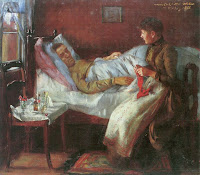 And yet, I also think we must resist the urge to make this all about these four, misguided teenagers. They are not an anomaly, they are a symptom. There is precedent for misdirecting uncomfortable emotions into hurtful acts as far back as the Book of Genesis! If we label this whole incident as "just" an aberration, we learn nothing. In reality, this has tapped into a sickness that is much, much deeper, and is causing severe damage to everyone living in the United States, and possibly around the globe. This sickness includes (but is not limited to) our fear of The Other, and our strong desire to boil issues down to "us" and "them," "good guys" and "bad guys." Both behaviors are incredibly destructive. Let us not miss the opportunity to tackle the larger issues at stake here. When these racially tone-deaf children have been disciplined, let us NOT put this issue to rest. Because the emotions under the surface remain... and we NEED to talk about THOSE issues if we are ever going to begin the healing process.
Images in this blog post:
1. CC image from 1948 (so NOT the image from earlier this week!) courtesy of Ras67 on Wikimedia Commons
2. CC image courtesy of Francois Maitre's "Jacob Blessing His Sons," courtesy of Wikimedia Commons
3. CC image courtesy of Quinn Dombrowski on Flickr
4. CC image of Lovis Corinth's "Vater Franz Heinrich Corinth auf dem Krankenlager," courtesy of Wikimedia Commons

We can even look specifically in this week's Torah reading, in fact. This final parashah in the Book of Genesis actually ALSO includes the distribution of a fake letter that is

Furthermore, Joseph's reaction to his brothers' appeal is to begin crying. The text suggests he's weeping because he is not, in fact, holding a grudge, but wants only to forgive. Though I also wonder if the tears reflect a deep sadness that they had to lie to him, that they couldn't just speak their fears in words.

Yes, of course I am angry at these foolish children who have no "real" understanding of the centuries of racism and hate they tapped into. Nor do they understand the culture of divisiveness that has never been dealt with in this country. I am upset with their stupidity, and I am furious at their insensitivity and astounding lack of judgment.

Images in this blog post:
1. CC image from 1948 (so NOT the image from earlier this week!) courtesy of Ras67 on Wikimedia Commons

2. CC image courtesy of Francois Maitre's "Jacob Blessing His Sons," courtesy of Wikimedia Commons

3. CC image courtesy of Quinn Dombrowski on Flickr
4. CC image of Lovis Corinth's "Vater Franz Heinrich Corinth auf dem Krankenlager," courtesy of Wikimedia Commons

Friday, December 14, 2018
Vayigash: Oy, Another Jewish Banker...
I go back and forth about this whole "Radical Honesty" thing. As you may (hopefully) recall, that was my theme of my sermons at this year's High Holidays, and it has since morphed into a personal creed for the whole year... possibly even
 beyond. But honesty is hard. Not everything needs to be shared, not all the time, and not with everyone. On the other hand, how is it completely HONEST if it's selective??? For example, should I share with you the uncomfortable details of our Torah portion? It may be truthful to focus on ways that our text has led to anti-Semitism, has fanned the flames of racist stereotypes, and could be used against us as examples of karma or poetic justice; we got what we deserved! Do people want to hear it? Do I/we want to look at it and try and make some sense of what our ancestors did and why? Clearly, the answer is "yes," because I'm about to tell you about it now! Though I acknowledge it is complex, and that sometimes the truth can hurt. Maybe the main point is, nothing is ever as simple as it seems...
The Joseph story (and thus the entire Book of Genesis) are about to conclude. This section may be familiar to you; Joseph brings his family down to Egypt, life is good, Pharaoh loves him... but then a new Pharaoh arises who does NOT know Joseph.
 Dark clouds begin to spread across the sky, and we have an ominous feeling heading into the Book of Exodus. What is sometimes left OUT of the narrative, and which is unpleasant to talk about, is how Joseph conducted himself as Grand Vizier in Egypt. The end of our parashah makes it abundantly clear that he was not a kind-hearted, people-focused ruler. After seven years of plenty - and thus seven years of stockpiling and hoarding grain - Joseph does NOT redistribute the food back to the Egyptians during the subsequent famine. Instead, he SELLS it back to them, and little by little acquires (on Pharaoh's behalf) essentially the rights to all the land of Egypt. The people sell him EVERYTHING; ultimately declaring: "Take us and our land in exchange for bread, and we with our land will be serfs to Pharaoh; provide us with seed that we may live and not die" (Gen. 47:19). The Egyptian priests are spared; however with the exception of the top 1% of the population, everyone else is now essentially a slave.
I think you can see why this is SO uncomfortable to read. The outsider - the Jew - comes in and enslaves the people!! The tax collector, the banker, the money-grubbing Hebrew; this story reinforces all of the worst stereotypes and fears that
 people have about Jews. Bitterly we must acknowledge that our Jewish history has been filled with this awful trope over and over and over again. From Pharaoh's perspective, it's perfect! If all goes well, Pharaoh looks like a genius and a savior for bringing Joseph in at the right time to save the people. If it all fails; blame the Jew. And this constantly repeating pattern has made us all nervous. It doesn't help to see a daily barrage of stories about Jews like Bernie Madoff, Harvey Weinstein, Michael Cohen, Jarred Kushner, and so, so many others. People in positions of power and influence, who took (or take...) advantage of the system for personal gain, greed, and dominance. How can I ignore the ways in which this story plays RIGHT into all those awful models?!?!
Well, that's where honesty comes back in. We can't hide from our past... or from our present. Let's acknowledge the wrongs we see committed - whether in the Torah, in Hollywood, on Wall Street, or in Washington. Joseph's story IS in the
 Torah. It is also true that we collectively suffer for his decisions. Bringing the family down to Egypt leads to enslavement and oppression. All the ways that Joseph subjugates the Egyptians are soon mirrored in Pharaoh's persecution of the Hebrews. Is it indeed poetic justice?? Perhaps. It is also a stark reminder to us of what happens when we pursue wealth at the expense of others, power on the backs of the less-fortunate. I think we have to read these stories year after year, to remind ourselves of the risks of abuse of power. This also doesn't just affect the wealthiest Jews or those with public personas. We all need to take this lesson to heart and work on our humility, our compassion, and our concern for ALL people around us, not just our own family and friends... you know, if we're being really honest...
Images in this blog post:
1. CC image courtesy of Nick Youngson on Alphastockimages.com
2. CC image courtesy of Pixnio
3. CC image courtesy of Meanwhile in Budapest
4. CC image courtesy of Wikimedia Commons

The Joseph story (and thus the entire Book of Genesis) are about to conclude. This section may be familiar to you; Joseph brings his family down to Egypt, life is good, Pharaoh loves him... but then a new Pharaoh arises who does NOT know Joseph.
 Dark clouds begin to spread across the sky, and we have an ominous feeling heading into the Book of Exodus. What is sometimes left OUT of the narrative, and which is unpleasant to talk about, is how Joseph conducted himself as Grand Vizier in Egypt. The end of our parashah makes it abundantly clear that he was not a kind-hearted, people-focused ruler. After seven years of plenty - and thus seven years of stockpiling and hoarding grain - Joseph does NOT redistribute the food back to the Egyptians during the subsequent famine. Instead, he SELLS it back to them, and little by little acquires (on Pharaoh's behalf) essentially the rights to all the land of Egypt. The people sell him EVERYTHING; ultimately declaring: "Take us and our land in exchange for bread, and we with our land will be serfs to Pharaoh; provide us with seed that we may live and not die" (Gen. 47:19). The Egyptian priests are spared; however with the exception of the top 1% of the population, everyone else is now essentially a slave.
I think you can see why this is SO uncomfortable to read. The outsider - the Jew - comes in and enslaves the people!! The tax collector, the banker, the money-grubbing Hebrew; this story reinforces all of the worst stereotypes and fears that

Well, that's where honesty comes back in. We can't hide from our past... or from our present. Let's acknowledge the wrongs we see committed - whether in the Torah, in Hollywood, on Wall Street, or in Washington. Joseph's story IS in the

Images in this blog post:
1. CC image courtesy of Nick Youngson on Alphastockimages.com
2. CC image courtesy of Pixnio
3. CC image courtesy of Meanwhile in Budapest
4. CC image courtesy of Wikimedia Commons
.jpg)
Subscribe to:
Posts (Atom)