Thursday, October 6, 2016

Rosh Hashanah 5777 - Day 1 Sermon

As I've done in previous years, I am posting my High Holiday sermons here on the blog. If you're planning on joining us for Yom Kippur, here's your chance to catch up on this year's holiday theme. If you heard it, but can't remember what I said, I guess this is kind of like a transcript! :-) Or maybe you're just curious to know what I spoke about. The only other thing I'll say, by way of introduction, is that our synagogue president, Rich Kaplan, had just finished telling the community that I had re-signed with Ohev Shalom for another seven year contract! That should help explain my first sentence... (And please feel free to post reactions/thoughts/comments on the sermon. Thanks!)


Rosh Hashanah 5777, Day One, D’var Torah
Shanah Tovah!
       Well, now you know; you’re stuck with me. We have seven more years together, fifteen in total, and who knows where we’ll go from there. It’s hard to believe. But I want to tell you honestly, from the heart, how thrilled Rebecca and I – and now Caroline and Max – are to be a part of this community. You have done so much for us, and you are such a central and crucial part of our lives, that we really did not hesitate for a moment to re-sign with Ohev Shalom. I want to especially thank Rich Kaplan for your leadership, support, and friendship, together with our three terrific VPs, Amy, Joel, and David, and a special thanks to Matt Tashman and David Pollack, who negotiated the contract with me, and who made the whole process feel like three friends sitting down and trying to work together as a team to make this happen. I feel really, really blessed.
I do think, however, that this whole thing surprises some people. From time to time, I hear from congregants – usually second- or third-hand – that there’s speculation about when I’ll leave, not if. I don’t believe they WANT me to go, but the assumption is that, obviously, Rebecca and I want something else. Eventually we must want an enormous congregation, a big city, a broader reach; it’s only a matter of time, right? Well, I hope we’ve laid some, if not most, of that to rest, at least for the next seven-plus years. We are home.
I want to take a moment and explore with you the assumption that people were making. “We must want more.” Doesn’t everyone? More, bigger, faster, greater… I don’t know. Do we? Is that the ideal? Our ancient rabbis, in a book entitled “The Ethics of Our Fathers,” “Pirkei Avot,” wrote, “Eizehu Ashir? Ha-sameiach b’Chelko?” “Who is wealthy? One who is happy with his or her portion.” It sounds SO simple. “Just be content with what you’ve got.” Well, you and I know, that’s HARD to do! It’s difficult to allow ourselves to be happy, content, satisfied with what we have. Sometimes (often), we DO want more, we want bigger… we want perfection. Otherwise we’re lazy, right? We need always be striving, reaching, and challenging ourselves, or else we’re just slackers.
My High Holiday theme, the focal word of which I am about to unveil to you in another minute, centers on “Good Enough.” Which I’m sure at least some of you hear as me saying we should settle. “Good Enough” sounds like a cop out, a giving up. But that is NOT the message I want to convey. “Good Enough” can be GOOD. Just “good.” We come here on the High Holidays and we talk about repentance, but I’m not sure any of us REALLY know what we’re repenting for, or what we’re repenting TO! We sometimes feel we need to apologize for not being perfect. Let me save you the suspense; we are not perfect. None of us. And after Yom Kippur is over, we STILL won’t be perfect.
We need to find that balance where we’re challenging ourselves to do a little better, while still accepting our imperfect, broken, flawed, Good Enough-selves. But it might surprise you to hear how my theme word for this year reflects that value.
This High Holiday season, I want to talk to you about the Hebrew word, “Kavod.” We usually translate “Kavod” as “honor” or “respect.” It is also commonly used to mean “glory,” as in the famous phrases from our Siddur, “Baruch Sheim KEVOD Malchuto l’Olam va’Ed,” or “Baruch KEVOD Adonai mi’Mekomo.” These well-known lines tell us that the KAVOD of God, or of God’s Name, fills the earth, it radiates all around us. We are indeed talking about God’s tremendous Glory, or the respect and honor we show to God. (Pause) Soooo, how can this be my key word for a sermon theme on “Good Enough”? How do respect, honor, and glory relate to being content and satisfied? That is a great question… and I’m going to ask you to hold onto it for just a little bit longer.
If you’ve been coming here for any of the last seven years, you may also know that I try to tie a metaphor to my theme as well. In the past, I’ve used Biblical quotes on a Sanctuary wall in England, ripples spreading outward across the surface of water, or pieces of a puzzle that come together to form an image – I believe, I hope, that my holiday theme-message AND the metaphor will come together to illustrate my point. (Pause) Let’s see if it works…
If you look up at the Sanctuary walls to the left and right, you see the beautiful mosaic panels of our newly dedicated Children of Israel Collection. A year ago, we had completed half the project, and now it is finally complete, and well over 120 of you participated in making these incredible pieces of art. But there is a problem with them. We call them the “Children of Israel,” and we say they reflect who we are, but only one in fourteen is a woman, Dinah. And they don’t reflect racial diversity, they don’t necessarily represent our religious diversity, as our community contains many, many interfaith families, and though we don’t KNOW this for sure, and can never know, they don’t overtly reflect a spectrum of sexual orientation or sexual identity either. I can’t fix all of that. Our Bible is a product of its time; but I want to name that challenge for us today, and dedicate my sermons this year to diversity in our community. I am seeking ways to make these panels represent all of us, either in what you see, or in what you DON’T see. That is my plan. I’ll admit, it isn’t perfect… but maybe it’s good enough.
You see, all the names on our walls were indeed children (or grandchildren) of our patriarch, Jacob, also known as Israel, so the name of our collection makes sense. But for each of my sermons this year I would also like to highlight one of our Jewish matriarchs. Let’s face it, it would have been hard for Jacob to produce even one of these kids all on his own! But I also don’t want to speak about our four “classic” matriarchs, Sarah, Rebecca, Rachel, and Leah.
I want to speak about the four women who birthed Jacob twelve sons and a daughter, namely Leah and Rachel, but also Bilhah and Zilpah. If you’ve never heard those last two names, I invite you to come back for more holiday services, and hopefully I can shed a little light on them for us all. By naming these four women, my intention is to acknowledge and honor more than just the male, Jewish, white, cisgendered names you see on these walls. Our history is deeper and more nuanced, and certainly our present and future is as well.
Today, I want to start my series on Kavod, and on Good Enough, by telling you about Leah, Jacob’s first wife. Hers is a pretty tragic story. Jacob wanted to marry her sister, Rachel, but their father, Laban, tricked Jacob into marrying Leah first, and made him work longer to earn Rachel’s hand as well. In a cruel twist of fate, Rachel couldn’t have any children, at least not at first, but Leah had no such trouble. Not only does she give birth to four sons in rapid succession, but the Torah tells us she named her sons herself, perhaps because Jacob didn’t care to take the time. And the names she chooses are SO painful for us to hear. She calls her first son, Reuven, meaning “now my husband will love me.” (Gen. 29:32) It cuts you right in the heart to hear such a thing. Simeon, her second son, was so named because, “Adonai has heard that I was unloved, and has given me this one as well.” (33) And Leah called her third son Levi, meaning: “This time my husband will become attached to me, for I have borne him three sons.” (34)
Her pain is unmistakable. Jacob can’t see her… except when he wants something. There is no honor in this relationship, no respect at all. And certainly, no glory.
But then, Leah grabs hold of her own fate. She doesn’t need him. She finds glory and honor elsewhere, in herself and in her children. Her fourth son, Judah, from whom we derive the term “Jew,” is given a name meaning: “This time I will praise Adonai.” (35) Our Etz Hayim Chumash writes in the commentary on this verse that, “Her heartfelt prayer of thanks reflects her having grown from self-concern and a focus on what she lacked to a genuine sense of appreciation for what was hers.” Is it a perfect scenario? No, of course not. We don’t get to choose all the factors in our lives. But when we honor ourselves, and we honor our own accomplishments and abilities, and the things for which we should be grateful, our lives are good. They are Good Enough.
So what do I mean when I say our theme this year is “Kavod”? Last year, we spoke about Ahavah, Love. Love is the peak, it is the ideal. We want to love ourselves, and love the people around us, and our community, and God, and, and, and. That all sounds terrific. I know. I said it… last year! But love is hard. Sometimes it is truly difficult – it can even feel impossible – to get there. One of the Ten Commandments, the one regarding our parents, says “HONOR [Kaved] your father and your mother.” From our same root word, Kavod. The rabbis jump all over this. Why not love!?! Why just “honor” your parents???
Because family relationships can be tough. Just look at this morning’s Torah reading, about Abraham, Sarah, Hagar, and their children. Relationships are so complex, so fraught with difficult emotions, you cannot always command yourself to love. Leah prayed fervently for God to command Jacob to love her. Life doesn’t always work that way. But we also don’t have to walk away, if we cannot reach that peak.
We aren’t limited to just two options, or at least we shouldn’t be. That’s why I’m talking to you here today. We don’t have to EITHER love with all our hearts, and souls, and might OR cut ties, burn bridges, and HATE The Other. And I’ll be speaking more about this throughout our holiday services together – about how we relate to our community, and Israel, and other people around us. In this Season of Repentance, I want to talk to you about four ways to find that middle road, to seek improvement, but without judgment. To strive for better, while also being kind and compassionate… and forgiving. And our matriarch this morning, Leah, reminds us that we need to take care of, and honor, ourselves.
Let me give you one more example of how you can do this. I am sure in each of our lives, there are many ways that this can be done. I invite and encourage you to examine yourself – in this season of self-examination – and find areas where you can treat yourself with more honor and respect, either by giving a little extra effort OR by easing off the throttle, giving yourself a break,
and showing yourself some more compassion. It’s not a cop out! It’s not settling. It’s leaning into Good Enough. But since we’re sitting here in a synagogue, and you’re listening to a rabbi, let me also give you a religious example. Let’s talk about observance, and commitment to Judaism. Here it comes, folks: The opposite of my Guilt-Free Judaism speech! It’s the Guilt-Is-Back Speech!!
Ok, you obviously know that’s not true, especially if you’ve listening to anything I’ve said these past 12 minutes. Last year, on the 2nd day of Rosh Hashanah, I introduced a concept, that I want to reinforce for you today. Does it count as plagiarism if I’m quoting myself? A year ago, I spoke about my frustration with our current Jewish lingo. If you keep Shabbat or keep Kosher, you are called Shomer Shabbat or Shomer Kashrut; Shomer Shabbes. And if you don’t observe the laws PERFECTLY, there’s no other term for you. It’s all or nothing. Last year I said, “If you, for instance, come to Friday night services, but then go to the Phillies game or go out to dinner at a restaurant - AND do NOT order Kosher food - I still say you brought Shabbat into your life, and that constitutes real commitment. If you keep a Kosher home but don’t eat Kosher food outside, that too represents genuine, heartfelt dedication to Judaism. I cannot call that “Shomer Shabbat” or “Shomer Kashrut,” but maybe I don’t need to. Or want to. It is hurting us, as a people, to define ourselves as good or bad.”
In that speech, a year ago, I made up a new term. Well, I had the idea, and developed the concept, but then I couldn’t think of a name. And it was Rabbi Miller, with whom I had then only worked for a month or two, who actually came up with the perfect term. And though I unveiled it last year, it’s actually perfect for this year’s theme. We need a new category, an in-between option that’s more than nothing but less than fully observant. I submit to you, “Mechabeid Shabbat” and “Mechabeid Kashrut,” “Honoring Shabbat” and “Honoring our Dietary Laws.” Just as love is the pinnacle of a relationship, Shomer Shabbat is the pinnacle of ritual adherence. Mechabeid Shabbat is Good Enough, but not in a way that connotes settling or falling short. Good Enough is GOOD.
So let me turn the spotlight on all of you. Is there room for “Mechabeid Kashrut” in your lives? You don’t need to be an Orthodox Jew, or even – God forbid – a rabbi. But is there a place for Good Enough, for honoring yourself by infusing life with more joy, meaning, and spirituality in your daily experiences? To add one practice, or one more intention to the way you live your life today? To not feel you need to make excuses for your level of knowledge or spirituality, while simultaneously challenging yourself to remain on that journey, to remain in relationship with your Judaism?
This is my invitation. I’ll echo my sentiment from last year: “Bring your authentic selves; bring all aspects of your struggles with Judaism and its rituals, and leave behind the obstacles and barriers that you think Judaism has put up to keep you at bay. Judaism is not holding you at arm’s length; it is inviting you in.” Like our great ancestor, Leah, we too can flip the script and break the cycle of negativity and self-judgment. In that way, it isn’t just “Mechabeid Shabbat” or “Mechabeid Kashrut,” it’s also “Mechabeid et Atzmecha/Atzmeich,” “Honor and Respect Yourself.” Use the opportunity of these holidays to strive and push to be more content and happy, and it will make each and every one of us truly and gloriously wealthy indeed.
Shanah Tovah!


Friday, September 30, 2016

Rosh Hashanah: Embracing an Imperfect Process

On Sunday night, we begin the High Holiday season. Rosh Hashanah, Yom Kippur, Sukkot, Sh'mini Atzeret, and Simchat Torah - it's a long series of holidays, and each offers its own set of intentions, kavanot,
for what we're trying to get out of the experience. Taken together, they are filled with awe, inspiration, fear, joy, song, dancing, chest-beating, sadness, reflection, vulnerability, strength, warmth, solitude, and celebration. We're all over the map!! One of the things this brings to mind for me is something I like to say to people with some regularity: The term "Organized Religion" is an oxymoron.

When we organize something and ritualize it, we make it work for a whole group of people. We give it structure, predictability, order. And the word "religion," to me, refers to each of our personal, unique, individual relationships with God. So they are sometimes quite contradictory. But sometimes we need one, and sometimes the other. When we come to shul on the High Holidays, we look for familiar tunes that we can all join in on - Avinu Malkeinu, Ki Anu Amecha, Ha-Yom - and we listen for prayers that tell us we're in the Days of Awe, like Kol Nidrei and Un'tane Tokef. But the Season of Repentance should also include moments of personal reflection, introspection, and remembrance of loved ones. We pivot back and forth between communal, public experiences, and quiet, internal contemplations.

There's no one, single way to do this. And there's no one, ubiquitous emotion you should be feeling right now. Perhaps this year you are more in the mindset of Simchat Torah, needing to dance, shout, and express joy. Or maybe you feel
moved by the Yizkor remembrances and the Eileh Ezkerah, which remind us of the pain of past generations of our ancestors. Or you're somewhere between those two. Regardless, your High Holiday experience isn't going to be exactly the same as the woman sitting next to you, or the man six rows behind you. And none of you, of us, may feel wholly transformed by the liturgy. That is all ok. Just find your place in the hubbub of it all, physically and emotionally. Reflect on where you yourself are right now, and where you might fall along the spectrum from "organized" to "religion," or from Rosh Hashanah to Simchat Torah. Somewhere in all of it, waiting to be discovered, is you.

May you find meaning in this Season of Repentance. May you experience peace, inside and out, and harmony among all the parts of yourself that are vying for attention. Allow yourself to accept that this is an imperfect process, simply because we are all imperfect, struggling, messy, improving, wonderful beings. Be compassionate with yourself, and kind and forgiving with others. Challenge yourself to be a part of something, to invest and commit; but push yourself also to make room for your own needs, as well as some alone time. And every once in a while, give yourself a "should-less" day. May you obtain all parts of our holiday greeting: a Happy, Healthy, and Sweet New Year.

Shanah Tovah!


Photos in this blogpost:
1. CC image courtesy of יעקב קירש on Wikimedia Commons
2. CC image courtesy of Geagea on Wikimedia Commons
3. CC image courtesy of Itzuvit on Wikimedia Commons
4. CC image of "Co-exist" bumper sticker courtesy of Integral Church on Wordpress

Thursday, September 22, 2016

Ki Tavo: Mining the Curses for Hidden Blessings (guest-blog)

This week, my colleague and friend, Rabbi Kelilah Miller is guest-blogging for me. When life throws you curve balls, it's nice to know there are relief pitchers in the bullpen...

I want to thank Rabbi Gerber for inviting me to share some thoughts on the Torah portion as a guest blogger this week.  It is a special honor to be invited to guest-blog this week in particular, since it is on this coming Shabbat that Ohev Shalom will be officially welcoming Rabbi Gerber’s new son Max into the community and celebrating this new addition to the Gerber family!  Mazal Tov!

In keeping with the idea of celebrating new beginnings, this week’s Torah Portion is all about the privileges and responsibilities of (finally!) entering into the Land of Israel.  Also, in keeping with the hopes and anxieties of many parents (new and otherwise), this week’s Torah Portion contains a long litany of potential blessings and curses that await the People of Israel in the Land.

The blessings and curses of Parashat Ki Tavo are delivered in dramatic fashion, with half of the tribes of Israel shouting the blessings from one mountain and the other half of the tribes shouting the curses from another.  If the People of Israel observe God’s Covenant, they will be blessed beyond measure.  If they reject the responsibilities of the Covenant, they will suffer dire consequences.

It is interesting to note that this is not just another message that Moses delivers to the People as a “solo speech”. By having the tribes recite both the blessings and the curses, Moses forces the People to take ownership over what they are saying.  They have to own and acknowledge that they are not powerless victims of random fate or beneficiaries of blind luck.  They also have to recognize that they are not the sole masters of their fate.  Instead, they are partners with God in an effort to maximize blessing in the Land.  They are part of an integrated system of cause and effect, a web of ethical connection and Covenantal responsibility.

While perhaps not all of us subscribe to a literal understanding of God as an all-powerful (perhaps punitive) judge, we are becoming more and more aware of our interconnectedness as we confront a looming, multifaceted, and ongoing environmental crisis. As the scientific evidence piles up, it becomes clearer and clearer that we have a powerful opportunity to claim and shape our role as agents of either blessings or curses.  Just as the Children of Israel need to name the blessings and curses in this week’s Torah Portion, maybe we need to name the curses that we risk bringing upon ourselves as well as the blessings that might emerge from a community and culture that are grounded in the awe and wonder of Creation.

It just so happens that this Shabbat coincides with Interfaith Food Waste Weekend, when many religious communities are exploring the impact of food waste on our lives, on our communities,  and on the planet.  As Rabbi Gerber and I were discussing the Torah Portion this morning, he observed that the issue of food waste really encompasses both blessings and curses.  We are blessed by an abundance of food on our planet.  If we were to distribute that abundance justly and efficiently, no person would need to go hungry.  But we bring curses on ourselves when we waste the blessing of food.  And it’s not only the curse of hunger that we create through wasting food; the carbon footprint of food waste rivals that of some entire countries.  Our inefficient food systems actively contribute to the degradation of a livable planet.

But...just as blessings can be transformed into curses through carelessness or spiritual disconnection, curses can also be mined for blessings.  The precariousness of our ecological situation reveals awe-inspiring truths about our relationship to all living things and provides inspiration to act on a more powerful vision of the future.  In bearing witness to natural disasters and the injustice of hunger, we can become more keenly aware of the image of God in all people and discover commonalities that make us better allies to one another.

I hope that, as we enter into the High Holiday season, we find ways to take joy in the recognition of our partnership with God, and in the responsibilities and opportunities that go along with that relationship.

Friday, September 16, 2016

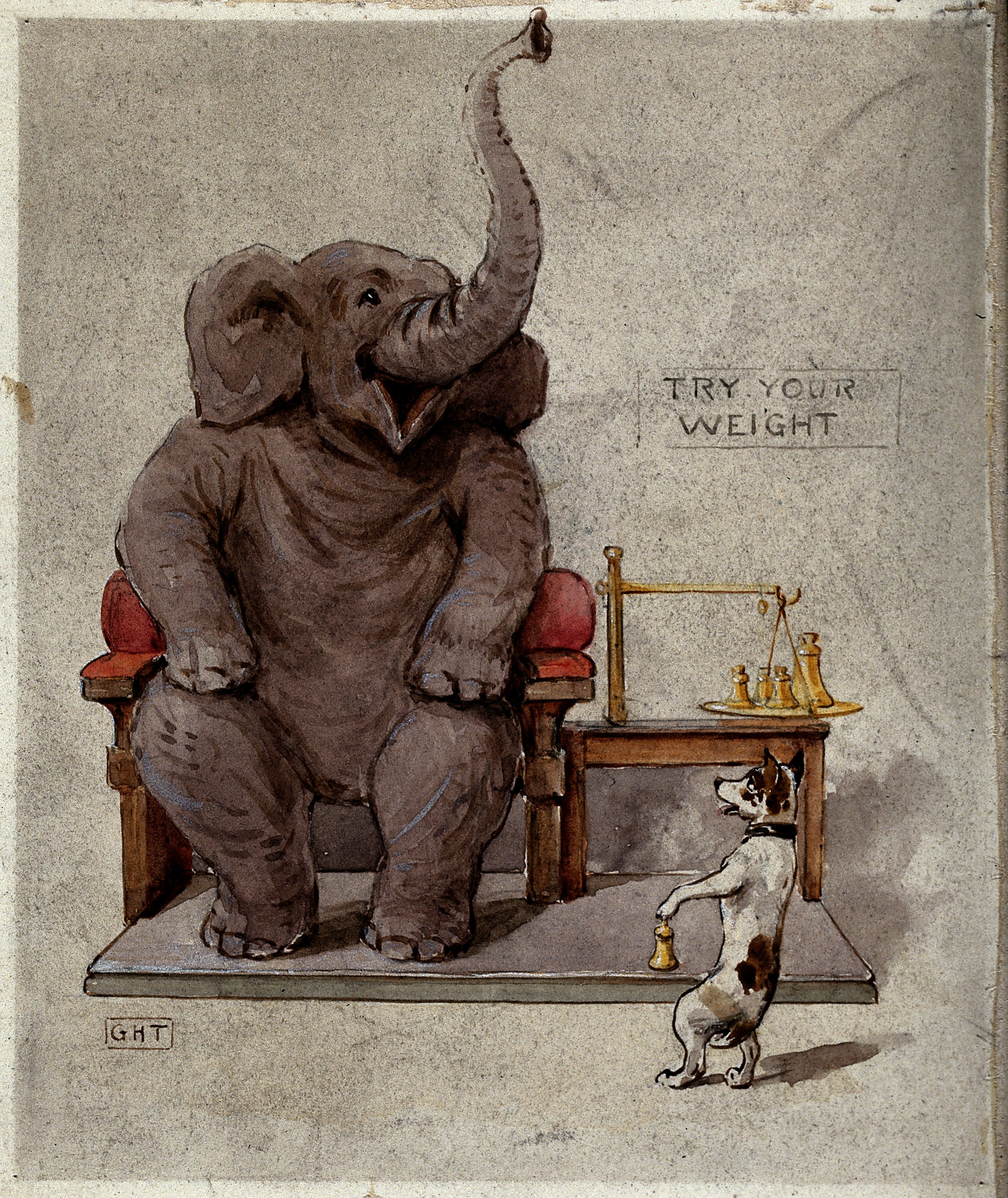
Ki Teitzei: Weighing In On Community

Sometimes, the fabric that holds our society together is pretty thin. We'd like to think it's incredibly solid, and that it cannot be broken.
We'd like to believe that even if something, or someone, chips away at the values and systems we hold dear, we can still survive, because we're bigger and stronger than that. And it can be scary to even consider the possibility that we're not that secure. However, the situation gets worse if we refuse to open our eyes to the problems and the challenges. Denial isn't going to help us, but there's something else that might...

This week, our Torah portion deals with several issues that can undermine an entire society. It addresses idolatry, slavery, honesty, and marital relations. And then we read a short section, right before the end of the parashah, that instructs Israelites to use honest weights and
measures. Is that a serious issue? How does that eat away at the fabric of community? Well, imagine a society that existed before currency. When you wanted to purchase products in the market, it was all done using weights and measures. If the merchant hollowed out a weight that was meant to balance out a product being sold, it misrepresented the mass of the item, and ultimately undermined the entire system. The Torah concludes this section by stating: "For everyone who does those things, everyone who deals dishonestly, is abhorrent to Adonai, your God" (Deut. 25:16). Not only is it offensive to God, it corrupts and distorts the way society functions. Look at Bernie Madoff and his ponzi schemes. They didn't just affect a few individuals or companies; they had disastrous rippling effects throughout the country and the world. We are all interconnected. A ponzi scheme is essentially the modern equivalent of a hollowed-out weight in the market place. And it does tremendous damage.

The verse before the one I quoted above adds another important dimension to this. Deuteronomy 25:15 tells us: "You must have completely honest weights and measures, if you are to endure long on the soil that Adonai, your God,
is giving you." This verse might make it seem like Adonai is going to throw us out if we violate this law, but I want to offer a slightly altered reading. God won't throw us out; we'll do the job ourselves. We cannot endure, we cannot survive, if we corrupt our communities. We see it happening in the news, with dishonest mortgage practices, predatory lending, and other variations on this same theme of cheating the system. However, it doesn't just apply to big companies and national scandals; even on a local level, we need to look at our own contributions and ways that we help or hinder our communities. We need to take responsibility, or we'll essentially be throwing ourselves out on the streets by destroying our systems.

In this month of Elul, leading into the High Holidays, it behooves all of us to examine our role in the world around us. We might not be hollowing out weights on a physical scale, or trying to scam people out of their money or their homes - but we live in fragile societies.
We exist and co-exist in congregations, neighborhoods, counties, states, and countries, and when we remove ourselves from these structures, or subtly undermine them, they begin to break down. As you prepare for the High Holidays, think about the impact you have on the people around you. You are important; we are all crucially significant in the infrastructures surrounding us. We all carry a lot of weight, and we can tip the scales for good or for bad. How do YOU measure up?

Photos in this blogpost:
1. CC image courtesy of Andreas Bohnenstengel on Wikimedia Commons
2. CC image of "A Dog Weighing an Elephant" courtesy of Fae on Wikimedia Commons
3. CC image of JM Staniforth's "Chuched Out" courtesy of FruitMonkey on Wikimedia Commons
4. CC image of "Co-exist" bumper sticker courtesy of Integral Church on Wordpress

Friday, September 9, 2016

Shoftim: Do we "Infuse" or "Refuse"?

The Bible can't seem to make up its mind. How do we interact with the people around us? How are Jews meant to deal with non-Jews, and, in particular, how do we navigate shared spaces and communities?
Sometimes, they are our friends. Moses' father-in-law, Jethro, is not only a non-Israelite, he is a Midianite PRIEST! And he gives Moses crucial advice on how to govern the people during the Exodus. We also read the story of Ruth, who was the great-grandmother of King David. She was a Moabite, from a nation that we are told several times, explicitly, to avoid. So sometimes we live WITH our non-Jewish neighbors; learning from them, sharing our lives with one another, and we even - yes, it's true - intermarry. And then, there are stories like the ones in this week's Torah portion.

Towards the middle of our parashah, the text gives us a pretty straight-forward commandment: "When you enter the land that Adonai, your God, is giving you, do not learn to imitate the abhorrent practices of those nations" (Deuteronomy, 18:9).
Ok, we get it. Don't follow the local customs. The text specifically talks about idolatry, sorcery, and soothsaying; that kind of stuff. We might, therefore, think that we can live in towns next to theirs, as long as we don't pick up any of their kooky rituals... That's when the text gets a little dark and violent: "However, in the cities of these people, that Adonai, your God, is giving you as an inheritance, you shall not let a soul remain alive" (Deut. 20:16). It's pretty bad. And again, it's also confusing. Some of the people we're talking about are the same, or virtually the same, as the ones who gave us Jethro and Ruth, along with others who played FUNDAMENTAL roles in our Jewish story. Where would we be without Moses or King David?!? So how do we make sense of all this?

It's important to note, this is not a historical problem. We see Jewish communities today that try to isolate themselves from their non-Jewish neighbors, and who view all non-Jews as inherently suspect, untrustworthy, and "less-than." Sometimes we even feel that inclination
(a slight twinge perhaps) in ourselves... Right now - here in the United States in 2016 - we each have to make a choice about how we engage with the people around us, and decide whether to live WITH them or apart from them. The Bible is giving us some pretty extreme cases on either end of the spectrum, which I read as a challenge. The text is saying to you and me TODAY: "Where do YOU fall along this gamut?" Perhaps the most challenging question is, once we situate ourselves and figure out how we, individually and communally, feel about the people who live around us, how does that affect the way we live and what we do? Does that obligate us in some way?

This probably won't shock you, but I think it does. I believe we have a very serious and deep responsibility to help out in the world around us. It gets to the heart of what we call Tikkun Olam, Repairing the World.
It's not enough to say we've moved away from Deuteronomy's command to commit genocide; we obviously need to do much, much more. Here at Ohev Shalom, that means starting conversations on race and racism. We may not be the active perpetrators, but there's a deep rift and pain in our country, and we have an obligation to - at the very, very least - think about our own role in that dynamic. So far, we've started working on a cross-communal partnership called FUSE, which you can read about online at fusedelco.com. But we also need to talk some more, within our community. The Torah offers us many models, and some are purposely provocative to try and force us to engage with this issue. So let's engage.

If you're able to join me, we will be hosting our first internal Ohev conversation THIS Sunday, September 11th, at 2:00 p.m. at Ohev Shalom. We'll be doing more of these in the future as well. I also encourage you to respond here on the blog, or to me personally, if the subject of race, racism, and Jewish/non-Jewish relations strikes a chord in you. The Torah may not be able to make up its mind, but I think it's time that we did. What do YOU think?


Photos in this blogpost:
1. CC image of William Blake's "Naomi entreating Ruth and Orpah to return to the land of Moab" (1795) courtesy of Churchh on Wikimedia Commons
2. CC image courtesy of Rui Daniel Barros on Wikimedia Commons
3. CC image courtesy of Tony Webster on Wikimedia Commons
4. Image courtesy of Amy Pollack, a fantastic graphic designer (and congregant & friend), who made this incredible FUSE logo for us.

Thursday, September 1, 2016

R'eih: Too Quick to Judge a Slave

When trying to make sense of something, you really need ALL the information, don't you? The facts of the case, the context, the history, the players; everything can and should
contribute to your overall understanding. Too often in society, we see people making snap judgments about a myriad of things, or generalizing about other people, political parties, or stories they read in the news. In fact, I recently read a study that claimed that 6 in 10 people don't actually read the articles they share! They just see a headline and post it on Twitter or Facebook; that one line says all they really need to know. Or at least I think that's what the study said, I only read the first paragraph...

The Torah sometimes forces us to confront this problem. I know it's hard to believe a 3,000-year old text could have opinions about social media, but it's true! From time to time, the Torah will cover the same topic in several different places, but it either presents conflicting
information or leaves vital information out of one (or both!) of the sections. If you're familiar with the text, you sense that you need to dig a little to get a fuller picture. You need to make sure you've gathered all the information, compared and contrasted it, and identified the context, language, and history, along with various other factors that add essential details to our understanding. Snap decisions or drawing conclusions from insufficient data can get you in A LOT of trouble... and as we read in news reports from around the world, it often does!

Here's a very good example from this week's parashah: Deuteronomy, 15:12-18 tells us that a destitute Israelite can become your indentured servant, but you must release him after six years and help him get back on his feet. However, he may choose to remain your servant, at which point he is your property for the rest of your life... Wait, I don't get it.
Why would the servant CHOOSE to stay a slave, rather than become a free man? Our text doesn't say. But if we do a little digging, we might find an answer elsewhere. Back in Exodus, 21:2-6, we read the very same set of laws. In that instance, however, we ALSO learned that if the slave got married and had a family while in your service, the wife and children are NOT set free! You get to keep his family. But hey, at least he gets his freedom, right??? That section tells us the slave must make the following declaration to remain your life-long slave: "I love my master - AND MY WIFE AND CHILDREN - I do not wish to go free" (21:5). We are, perhaps, meant to understand this as an admirable proclamation of loyalty to his master; THAT'S why he wants to stay. Yeah, sure. I hear him saying something very different, don't you?

He's being blackmailed! He wins his freedom, but he has to leave his wife and children behind! The text, in both Exodus and Deuteronomy, claims the slave is choosing to remain in bondage, but I don't think it's a choice at all. And I think many of you would agree with me.
But again, we might not have fully understood the emotional ramifications and the context of his declaration, if we only had the passage from Deuteronomy. This should leave us with two important realizations: 1) Don't make snap judgments. Things are rarely black-or-white, and don't have simple answers. Look for the nuance and the subtlety in all areas of your life. And 2) Always put humanity and compassion first. Whether someone is a slave or a world leader, an ally or an enemy, don't reduce them to an object or a caricature. They, like you and me, have more depth and detail. The truth, in all its complexity and intricacy, is worth the extra effort. Do a little digging, read articles before you share them, and I think you'll find the reward is worth the hard work.

Photos in this blogpost:
1. Image courtesy of Rabbi Gerber's iPhone (screen shot from Facebook)
2. CC image courtesy of lchor202 on Wikimedia Commons
3. CC image courtesy of Hanay on Wikimedia Commons
4. CC image of Lincoln caricature courtesy of ken g6 on Wikimedia Commons

Friday, August 26, 2016

Eikev: Stuck Between Belief and Baloney

I'm having a fight with my Bible class. It's true! Well, maybe it's not so much a fight as it is a disagreement, or perhaps a recurring exchange with some mild pretend-frustration... but "fight" just sounds better.
Every Wednesday morning, I sit with a wonderful (but rowdy) group of congregants, and we dissect the text of the Torah. Now, I don't pull any of my punches. I studied at the Jewish Theological Seminary - home of source-critical, documentary-hypothesis, positive-historical, Wissenschaft des Judentums, scholarly study of Jewish text - so yeah, the class gets the unfiltered stuff. And as a result, we regularly wrestle with THE big question: "Who wrote the Bible?" And it's true, sometimes we fight. Sort of.

Several students in the class (who shall remain nameless), often ask variations on the same questions: "Is the text of the Torah TRUE?" and if it isn't, "Is all this stuff just made up?" Full disclosure; I can't easily answer either of those questions. We are MEANT to struggle with them. I hear my congregants
stating a black-or-white, either-or problem; either every word in the Torah is true and factual and Divine... or it's all just a bunch of baloney. And I just don't see it that way. This week, I believe the Torah agrees with my refusal to choose one or the other of these options. Deuteronomy, chapter 11 states (and I'm editing the quote a little): "Take thought this day that it was not your children, who neither experienced nor witnessed the lesson of Adonai, your God - God's majesty, mighty hand, outstretched arm, the signs and the deeds... what God did to Egypt's army... what God did for you in the wilderness... and to Datan and Aviram... - but that it was YOU who saw with YOUR OWN EYES all the marvelous deeds that Adonai performed" (11:2-7, all-caps my own).

Ok, so here's the problem: I wasn't there. Were you? We can, of course, wax poetic about our souls all being at Sinai, and that spiritually we are all interconnected with one another and with our ancestors. Yes, yes,
we get all of that. But I don't remember standing at Sinai. I don't feel like I, Jeremy Gerber, am IN this story. So I feel stuck. I'm not at one extreme end of the spectrum, wholeheartedly and cosmically connected to the Sinai experience; but I'm also not at the other end, dismissing the Torah's assertion as ludicrous or irrelevant. I WANT to make sense of it, to feel connected and represented, to believe that the text is speaking to me. I too want to be blessed by it! And maybe that, right there, is the key. My desire, my caring about the text and wanting to connect to it. That realization gets me just a little bit un-stuck.

This bit of insight - the importance of our own effort - is actually critical for the upcoming High Holiday season as well. You see, even the very first audience hearing these verses from Deuteronomy, they probably were living hundreds of years after the
Exodus as well! They had no personal experience of Sinai either. And yet, the Torah says "you were there!" But we suspend our disbelief, as they did. We accept the theatrics of it - even just for a little while - and we (briefly) let go of our skepticism. We have to make meaning of the text ourselves. When we WANT this thing, this Jewish enterprise, to work, we have to make it so. No one can make this meaningful FOR you. I can't assuage all the frustrations of my Bible class students. Meaning-making is very personal, it's unique and complex for each individual. What I want you to hear in that Biblical quote is not fact or fiction, but rather a yearning for relationship. A hand stretching out, desperately yet lovingly, for someone to reach back. Before you can do anything else, you have to let yourself SEE that hand... then the next move is up to you.

Photos in this blogpost:
1. CC image courtesy of Evan-Amos on Wikimedia Commons
2. CC image courtesy of LI1324 on Wikimedia Commons
3. CC image courtesy of Mielon on Wikimedia Commons
4. CC image courtesy of James Hill on Wikimedia Commons

Total Pageviews